
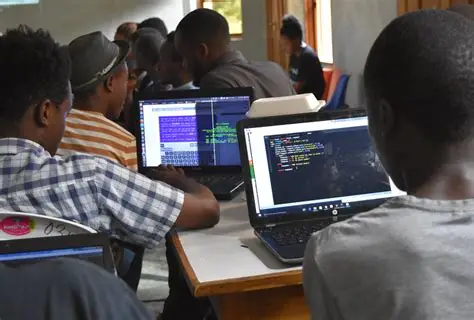
Tech draws more Nigerian students every year, and many of them choose Computer Science by default. That course works well, but it is no longer the only route. Universities now offer degrees in software engineering, cybersecurity and data science, and the industry also hires engineers, statisticians, designers and business graduates. This guide matches each tech career to the courses that lead toward it, so you choose with a clear target.
A degree does not guarantee a tech job. Many employers hire on demonstrated skill, and a strong portfolio often counts as much as a certificate. The right course gives you foundations, structure, mentors and a place to build that portfolio.
Start With the Role You Want
Tech careers fall into several broad groups.
- Building software, such as web, mobile and backend developers
- Working with data, such as analysts, data scientists and machine learning engineers
- Protecting systems, such as cybersecurity analysts and security engineers
- Running infrastructure, such as network engineers, cloud and systems administrators
- Designing products, such as UI and UX designers and product managers
- Building hardware and embedded systems, such as electronics and telecommunications engineers
- Supporting the business side, such as technical sales, fintech compliance and tech marketing
Decide which group excites you most before you compare courses.
Computer Science
Computer Science remains the broadest and most widely offered route. It teaches programming, algorithms, data structures, databases, operating systems, networks and the mathematics behind them. That foundation lets you move into almost any software or data role later.
Choose it if you want flexibility and you have not yet settled on a specialty. It also gives you the strongest base for postgraduate study.
Software Engineering
Software Engineering focuses on how teams build, test and maintain large software systems. You study programming alongside design, testing, project management and development methods. The National Universities Commission introduced degrees in software engineering, cybersecurity and data science in December 2022, so more schools now run it as a separate degree.
Choose it if you want to work as a developer or engineer on real products. Check whether a school offers the programme with full accreditation or only approval, because new programmes need time to complete the accreditation process.
Cybersecurity
Cybersecurity degrees train you to defend networks, systems and data. You learn network security, cryptography, ethical hacking, digital forensics and risk management. Several universities run the programme, including the federal universities of technology in Minna, Owerri and Akure, Federal University Dutse, Bayero University Kano, Ladoke Akintola University of Technology, Al-Hikmah University and Bowen University, among others.
Choose it if you enjoy investigation, problem-solving and protecting systems. Banks, telecom companies, government agencies and security firms all hire in this area.
Data Science, Statistics and AI
Data Science combines statistics, programming and machine learning to turn data into decisions. Federal University Dutse, Lagos State University and Enugu State University of Science and Technology have received approval for data science and related programmes, and Miva Open University and several private universities run them too. Artificial Intelligence degrees are also starting to appear.
Statistics and Mathematics give you a strong alternative route into data work, and many of the best analysts come from these courses. Choose one of these if you enjoy numbers, patterns and analysis more than building applications.
Information Technology and Information Systems
Information Technology focuses on setting up, managing and supporting technology systems for organisations. Information Systems sits between technology and business and teaches how organisations use technology to run. These courses lead to roles in systems administration, IT support, business analysis, ERP and enterprise software.
Choose them if you want to work inside organisations that run on technology, such as banks, hospitals, ministries and large companies.
Computer, Electrical and Electronic Engineering
Engineering routes suit students who want to build hardware, embedded systems, devices and networks.
- Computer Engineering blends hardware and software and leads to embedded systems, robotics and systems programming.
- Electrical and Electronic Engineering leads to electronics, power, control systems and telecommunications.
- Telecommunications Engineering leads to network and mobile infrastructure.
Engineering is a regulated profession, so confirm that your programme holds accreditation from the Council for the Regulation of Engineering in Nigeria. These courses also rank among the more competitive at well-known schools.
Design, Business and Communication Routes
Tech needs more than programmers.
- Graphic Design, Fine Art and Industrial Design feed UI and UX design and product design.
- Business Administration, Economics and Accounting feed product management, fintech operations, compliance and technical sales.
- Mass Communication and Public Relations feed tech content, marketing and community roles.
If you want to enter tech without heavy coding, pair one of these degrees with practical skills in design tools, analytics or product management.
Match Your Career Goal to a Course
| Career goal | Courses to consider |
|---|---|
| Software developer | Computer Science, Software Engineering, Computer Engineering |
| Data analyst or data scientist | Data Science, Statistics, Computer Science, Mathematics |
| Machine learning engineer | Computer Science, Data Science, Artificial Intelligence, Statistics |
| Cybersecurity analyst | Cybersecurity, Computer Science, Information Technology |
| Network or cloud engineer | Computer Science, Information Technology, Electrical and Electronic Engineering |
| Systems administrator or IT support | Information Technology, Information Systems, Computer Science |
| Embedded or hardware engineer | Computer Engineering, Electrical and Electronic Engineering |
| Telecom engineer | Telecommunications Engineering, Electrical and Electronic Engineering |
| UI or UX designer | Graphic Design, Fine Art, Computer Science, Industrial Design |
| Product manager | Business Administration, Computer Science, Economics, Information Systems |
| Fintech or tech operations | Accounting, Economics, Banking and Finance, Information Systems |
Universities Offering the Newer Programmes
The newer degrees spread across federal, state and private universities.
- Federal: the Federal Universities of Technology in Minna, Owerri and Akure, Federal University Dutse and Bayero University Kano run cybersecurity programmes, and Federal University Dutse has gained approval for data science and AI.
- State: Lagos State University has gained approval for new computing programmes including Data Science, and Enugu State University of Science and Technology has gained approval for AI, Cybersecurity, Data Science and Software Engineering from the 2026/2027 session.
- Private: Al-Hikmah University, Bowen University, Mountain Top University, Nile University of Nigeria and several newer private schools run computing degrees.
- Online: Miva Open University offers computing programmes through open and distance learning, including Computer Science, Cyber Security, Data Science and Software Engineering.
Approval and accreditation are different stages. A programme with approval can start admitting students, and full accreditation follows after assessment. Ask each school for the current status of your exact programme before you pay any fee.
Alternative Routes Into Tech
You can also enter tech without a conventional four-year degree.
- Polytechnic ND and HND programmes in Computer Science and related fields give you a practical start and a route to Direct Entry later.
- Bootcamps and structured online courses teach job-ready skills in months, and many people use them to add skills to a degree.
- Professional certifications in cloud, networking, security and project management prove specific skills.
- Self-study and projects work when you build real things and show them.
These routes work best when you combine them with a portfolio. Many students do both, earning a degree while learning practical skills on the side.
Admission Requirements
For Computer Science and related courses, most universities expect English Language, Mathematics, Physics and one more subject at UTME, often Chemistry, Biology, Economics or Geography. Engineering courses expect English Language, Mathematics, Physics and Chemistry. Data Science and Statistics lean heavily on Mathematics. Your O’Level result should carry five credits, including English Language and Mathematics.
JAMB set the national minimum UTME score at 150 for 2026/2027, and each department sets a higher cut-off of its own. Computer Science, Software Engineering and Computer Engineering rank among the more competitive courses at well-known schools, while newer programmes at newer schools may carry lower cut-offs. Check the current figure for each school before you register.
What Matters Beyond the Certificate
Tech employers hire people who show they can do the work.
- Build projects. Make real applications, analyses or systems and keep them public.
- Keep a portfolio. Show your code, designs or case studies in one place.
- Take internships. Seek placements at software companies, banks, startups and agencies.
- Learn continuously. Tools and languages change fast, so keep learning after graduation.
- Write and speak clearly. Communication separates good engineers from great ones.
- Get certified where it helps. Cloud, security and networking certifications add proof of skill.
- Stay realistic about AI. Tools change how work gets done, so build problem-solving ability, not only syntax.
Common Mistakes to Avoid
- Choosing Computer Science without knowing which role you want
- Assuming a degree alone gets you hired
- Enrolling in a new programme without checking its accreditation status
- Ignoring Mathematics in courses that depend heavily on it
- Skipping projects and internships
- Believing promises of guaranteed jobs or salaries from agents or schools
- Paying an agent or an unofficial account for admission
Frequently Asked Questions
What is the best course for a tech career in Nigeria?
Computer Science is the broadest choice, but Software Engineering, Cybersecurity, Data Science and engineering courses suit specific roles. Match the course to the job you want.
Do I need a degree to work in tech?
Not always. Many employers hire on skill and portfolio, but a degree helps with foundations, structure and some employers’ requirements.
What is the difference between Computer Science and Software Engineering?
Computer Science covers theory, algorithms and computing broadly, while Software Engineering focuses on building and maintaining large software systems.
What JAMB subjects do I need for Computer Science?
Most universities expect English Language, Mathematics, Physics and one more subject such as Chemistry, Biology, Economics or Geography.
Can I study Cybersecurity in Nigeria?
Yes. Several federal, state and private universities now run cybersecurity degrees, but confirm each programme’s accreditation status.
Can I enter tech without Mathematics?
Some roles, such as UI design, tech marketing and product operations, need less mathematics, but most technical degrees require a credit in Mathematics.
Conclusion
The best courses for a tech career depend on the role you want. Computer Science gives the broadest base, Software Engineering sharpens the builder’s path, Cybersecurity and Data Science open specialist routes, engineering courses lead to hardware and telecom, and design and business courses open the product and operations side. Pick a course that matches your target, confirm accreditation, build projects from your first year and keep learning after you graduate. The certificate opens the door, and your work keeps you in the room.



No comments yet. Be the first to share your thoughts.