
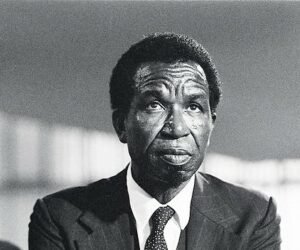
Cyprian Ekwensi was a Nigerian novelist, short-story writer, pharmacist, teacher, and broadcasting executive whose writing helped shape modern African literature. He became widely known for stories that explored the changing lives of Nigerians, particularly the social pressures, opportunities, ambitions, and inequalities associated with urban life. His best-known books include People of the City, Jagua Nana, and Burning Grass, works that brought different aspects of Nigerian society and culture to readers in Africa and beyond.
Beyond his literary career, Ekwensi held important positions in Nigeria’s information and broadcasting sectors. His professional experience gave him opportunities to observe the country’s social and political changes, which became significant themes in his fiction. He also wrote extensively for children and young readers, helping expand the range of Nigerian stories available to younger audiences.
Ekwensi remains an important figure in the history of Nigerian literature because his work explored both city life and rural communities, rather than presenting the country through a single cultural experience. His books continue to interest students, teachers, researchers, and readers studying African writing, Nigerian history, and the development of the modern African novel.
Cyprian Ekwensi Biography at a Glance
- Full name: Cyprian Odiatu Duaka Ekwensi
- Date of birth: September 26, 1921
- Place of birth: Minna, present-day Niger State, Nigeria
- Date of death: November 4, 2007
- Age at death: 86
- Nationality: Nigerian
- Professions: Novelist, short-story writer, pharmacist, teacher, journalist, and broadcasting executive
- Education: Studied at institutions in Nigeria, Ghana, and the United Kingdom
- Famous books: People of the City, Jagua Nana, Burning Grass, and Beautiful Feathers
- Major literary recognition: Dag Hammarskjöld International Prize for Literary Merit, 1969
- Spouse: Eunice Anyiwo
- Children: Five
Early Life and Family Background
Cyprian Ekwensi was born on September 26, 1921, in Minna, a town in northern Nigeria that later became the capital of Niger State. His full name was Cyprian Odiatu Duaka Ekwensi. Although he was born in northern Nigeria, his family background was Igbo, and his life brought him into contact with different communities and cultural traditions.
His father, David Duaka Ekwensi, was known for storytelling and elephant hunting. The stories and experiences associated with his family helped expose the young Ekwensi to oral narratives, local traditions, and accounts of adventure. These influences later became relevant to his interest in writing, particularly his work with folktales and stories for younger readers.
Ekwensi spent parts of his formative years in different Nigerian communities and attended schools outside his birthplace. Exposure to varied cultural environments gave him opportunities to observe differences in language, social customs, and everyday life. His later fiction reflected this breadth of experience, featuring characters from different backgrounds and settings.
Although his father’s storytelling is frequently mentioned in accounts of his literary development, Ekwensi’s career was also shaped by formal education, professional work, reading, and his observations of Nigerian society during the colonial period and after independence.
Cyprian Ekwensi’s Education and Qualifications
Ekwensi’s educational journey included studies in Nigeria, the Gold Coast, now Ghana, and the United Kingdom. His training covered subjects and professions that were not limited to literature. He pursued studies connected with forestry and pharmacy, qualifications that supported his early working life before writing became his principal occupation.
He attended Government College, Ibadan, where he developed his academic interests and read widely. His education exposed him to literature, mathematics, science, and other subjects that contributed to his general intellectual development.
He later studied at Achimota College in Ghana, an institution known for its role in education in British West Africa. His further training included the School of Forestry in Ibadan and pharmacy studies in Lagos and at the Chelsea School of Pharmacy associated with the University of London.
These studies gave Ekwensi professional options in forestry and pharmaceutical practice. He worked as a forestry officer before moving into teaching and pharmacy-related employment. His career therefore demonstrates that a writer’s development can involve experience outside the formal study of literature.
Readers researching his qualifications should distinguish his professional pharmacy training from a literary or university degree in English. His biography is notable for the combination of scientific and professional education with a substantial contribution to creative writing.
How Cyprian Ekwensi Started His Writing Career
Ekwensi’s interest in writing developed alongside his early professional experiences. During his years in forestry and teaching, he continued to create stories and explore different forms of expression. His familiarity with Nigerian oral traditions also influenced his early publications.
One of his earliest important books was Ikolo the Wrestler and Other Ibo Tales, published in 1947 under the name C. O. D. Ekwensi. The collection drew on Igbo stories and folklore, presenting traditional narratives in written form for a wider audience.
Ekwensi also wrote When Love Whispers, a romantic work associated with the popular publishing culture that developed around Onitsha. This strand of Nigerian publishing made inexpensive books and pamphlets accessible to readers who were not necessarily part of an elite literary audience.
His early work showed that he was interested in reaching ordinary readers as well as literary critics. He wrote about love, adventure, family life, cultural traditions, and the social realities that shaped people’s choices.
Ekwensi’s ability to move between popular storytelling and more ambitious fiction became a defining feature of his career. Rather than concentrating on one subject or audience, he produced works for adults, children, and readers interested in different aspects of Nigerian life.
Cyprian Ekwensi’s Career as a Teacher, Pharmacist and Broadcaster
Before becoming widely recognised as a novelist, Ekwensi worked in several professional fields. In the 1940s, he taught subjects including English, biology, and chemistry at Igbobi College in Lagos. His teaching experience connected him with young people and the educational environment of colonial Nigeria.
He subsequently worked in pharmacy education and practice. His professional experience included employment connected with pharmaceutical instruction and Nigerian medical services. These responsibilities provided a source of income while he continued developing his writing.
In 1951, Ekwensi moved into broadcasting and public communication through the Nigerian Broadcasting Corporation. He became involved in producing and presenting stories for radio audiences. Broadcasting offered him a direct way to reach listeners, and some of the stories he developed for radio later contributed to his longer fiction.
His work in the media eventually led to senior administrative responsibilities. In 1961, he became director of information in Nigeria’s Federal Ministry of Information. The position placed him within the country’s public communication system during a period of major political and social change.
Ekwensi’s experience as a teacher, pharmacist, writer, and broadcasting executive gave him a broad understanding of Nigerian society. His professional life also demonstrates how writers in the early decades of Nigerian independence often combined creative work with other occupations.
People of the City: The Novel That Established His Reputation
People of the City, published in 1954, was a major milestone in Ekwensi’s career. The novel examines urban life and the experiences of people navigating the opportunities and difficulties of a rapidly changing Nigerian city.
The book is particularly associated with Lagos, where social mobility, commercial activity, political ambition, and changing personal relationships formed part of everyday life. Rather than presenting the city as a simple symbol of progress, Ekwensi explored its competing attractions and pressures.
His characters encounter problems involving money, relationships, ambition, reputation, and survival. Through these experiences, the novel presents the city as a place where traditional expectations and modern lifestyles interact, sometimes uneasily.
The book helped establish Ekwensi as a significant voice in modern West African fiction. Its attention to urban characters and contemporary social realities distinguished it from stories focused primarily on village life or traditional settings.
For students of Nigerian literature, People of the City is important because it shows how fiction can document social transformation. The novel gives readers a literary perspective on the experiences of people living through changes in work, culture, politics, and family relationships.
Jagua Nana and Ekwensi’s International Recognition
Another of Ekwensi’s best-known novels is Jagua Nana, published in 1961. The story centres on a woman whose personal ambitions and relationships place her within the complicated social world of urban Nigeria.
The main character, Jagua, is a woman who seeks financial security, personal fulfilment, and a better life. Her choices expose the tensions between individual desires and the expectations imposed by society. Through her experiences, Ekwensi explores gender, class, money, sexuality, ageing, and the unequal opportunities available to women.
The novel attracted attention because it placed a female character at the centre of a story about modern African city life. Jagua is not presented simply as a symbol of virtue or wrongdoing. Her experiences reveal a society in which economic pressures and social expectations influence personal decisions.
The book became one of Ekwensi’s most widely recognised works and helped introduce his writing to audiences outside Nigeria. He later continued the character’s story in Jagua Nana’s Daughter, extending his exploration of family, society, and changing urban experiences.
Readers should understand Jagua Nana within its historical and literary context. Its significance lies not only in its subject matter but also in Ekwensi’s willingness to explore social issues that were often treated cautiously in public discussion.
Burning Grass and the Representation of Northern Nigerian Life
While Ekwensi is widely associated with city novels, Burning Grass demonstrates his interest in rural communities and pastoral life. The book, published in the early 1960s, focuses on the Fulani and their cattle-herding traditions.
The narrative follows Mai Sunsaye and members of his family, using their experiences to explore mobility, family responsibilities, cultural practices, and the relationship between people and their environment. The work offers readers a literary perspective on pastoral life in northern Nigeria.
This focus is significant because it shows the range of Ekwensi’s writing. His work was not restricted to the experiences of people in Lagos or other urban centres. He also explored communities whose ways of life differed from those of the city characters in his better-known novels.
For students studying Nigerian culture and literature, Burning Grass offers an opportunity to consider how fiction represents cultural diversity. It also raises questions about how writers portray communities with distinct economic practices, traditions, and relationships with the natural environment.
The book remains useful when comparing Ekwensi’s treatment of urban modernity with his representation of rural and pastoral society.
Other Books Written by Cyprian Ekwensi
Ekwensi produced novels, short-story collections, novellas, folklore collections, and books for children. His extensive output made him one of the more versatile Nigerian writers of his generation.
Some of his notable works include:
- ** Beautiful Feathers (1963):** A novel that examines modern African society and the challenges associated with social and political change.
- ** Iska (1966):** A novel that explores relationships and social expectations within a changing Nigerian environment.
- ** People of the City (1954):** A novel concerned with urban life and the experiences of people in a changing society.
- ** Jagua Nana (1961):** A novel centred on a woman navigating ambition, relationships, and social pressures.
- ** Burning Grass (1962):** A work exploring Fulani pastoral life and family experiences.
- ** Survive the Peace (1976):** A novel addressing the challenges of life after conflict.
- ** Divided We Stand (1980):** A later work concerned with division and social experience.
- ** Jagua Nana’s Daughter:** A continuation of the story associated with one of his most famous characters.
- ** Ikolo the Wrestler and Other Ibo Tales (1947):** A collection drawing on Igbo folklore.
- ** The Leopard’s Claw (1950):** An early work written for younger readers.
This list is not exhaustive. Ekwensi also wrote books such as An African Night’s Entertainment, The Drummer Boy, Passport of Mallam Ilia, Coal Camp Boy, and Samankwe in the Strange Forest.
His children’s writing deserves particular attention. At a time when the market for African children’s literature was still developing, Ekwensi created stories that gave young readers access to African characters, cultural traditions, adventures, and recognisable social experiences.
Cyprian Ekwensi’s Role in Nigerian Public Service
Ekwensi’s public career extended beyond literature and broadcasting. As director of information in the Federal Ministry of Information, he worked in a senior government communication role during Nigeria’s early years of independence.
The political crisis of the 1960s brought significant changes to his professional life. During the Nigerian Civil War, he became involved with the Biafran administration, serving in external publicity and broadcasting roles. These activities formed part of the wider political and communication struggle that accompanied the conflict.
Following the war, Ekwensi continued working in publishing and other professional activities. His experience across government information, broadcasting, and commercial publishing reflected the range of responsibilities he undertook during his lifetime.
His career is an example of the relationship between literature and public communication in Nigeria. Writers who worked in journalism, broadcasting, and government often encountered political developments directly, and these experiences could inform their understanding of society.
Awards and Achievements
One of Ekwensi’s major literary honours was the Dag Hammarskjöld International Prize for Literary Merit, which he received in 1969. The recognition reflected the wider attention given to his writing and his contribution to African literature.
He was also associated with the Association of Nigerian Authors and received recognition from literary organisations during his career. In 2006, he became a member of the Nigerian Academy of Letters, an organisation concerned with scholarship and literary achievement.
His achievements extend beyond awards. He helped expand Nigerian fiction’s subject matter by writing about city life, rural communities, popular culture, and the social experiences of children and adults. He also demonstrated that a Nigerian writer could build a substantial literary career while working in professions such as teaching, pharmacy, broadcasting, and public administration.
Ekwensi’s books have continued to be discussed in schools, universities, and literary studies. Their enduring value lies in the questions they raise about identity, culture, social change, inequality, and the everyday lives of Nigerians.
Cyprian Ekwensi’s Personal Life
Ekwensi was married to Eunice Anyiwo, and the couple had five children. Although accounts of his public career focus largely on his writing and professional responsibilities, his family life formed part of his personal history.
He maintained several interests beyond writing, including photography, motoring, swimming, and hunting. These interests reflected the variety of activities that accompanied his work as a writer and professional.
Details about a public figure’s private life should be treated carefully when reliable documentation is limited. Ekwensi’s most clearly documented public legacy rests on his literary output, his broadcasting and information work, and his contribution to Nigerian writing.
When Did Cyprian Ekwensi Die?
Cyprian Ekwensi died on November 4, 2007, in Enugu, Nigeria, at the age of 86. His death marked the end of a career that had spanned literature, education, pharmacy, broadcasting, publishing, and public service.
His passing was a loss to Nigerian literary life, but his books remained available to readers and researchers interested in the development of modern African fiction. His stories continue to offer insight into the social and cultural changes that shaped Nigeria during the twentieth century.
Cyprian Ekwensi’s Legacy in Nigerian Literature
Ekwensi’s legacy is rooted in his ability to write about different parts of Nigerian society. His urban fiction explored the ambitions and challenges of people living in rapidly changing cities, while works such as Burning Grass brought attention to pastoral communities and their cultural practices.
He also helped establish a place for children’s stories within Nigerian writing. By publishing folklore, adventure stories, and school-age fiction, he contributed to a body of literature that allowed younger readers to encounter African settings and characters in books.
His career further illustrates the diversity of routes into literary work. Ekwensi trained for professions outside literature, worked in education and pharmacy, and built experience in broadcasting and public administration. These experiences broadened his perspective and gave him access to stories from many areas of public life.
For students, teachers, and researchers, Ekwensi’s writing offers opportunities to study the relationship between literature and society. His books can be examined for their treatment of urbanisation, gender, class, cultural identity, family relationships, and the effects of political change.
Cyprian Ekwensi remains an important name in Nigerian literary history because he expanded the settings, characters, and experiences represented in fiction. His work helped bring the changing realities of Nigerian life to a broad readership and continues to provide material for the study of African literature.
Frequently Asked Questions About Cyprian Ekwensi
Who was Cyprian Ekwensi?
Cyprian Ekwensi was a Nigerian novelist, short-story writer, pharmacist, teacher, journalist, and broadcasting executive. He is known for books including People of the City, Jagua Nana, and Burning Grass.
When was Cyprian Ekwensi born?
He was born on September 26, 1921, in Minna, in present-day Niger State, Nigeria.
How old was Cyprian Ekwensi when he died?
Ekwensi was 86 years old when he died on November 4, 2007.
What did Cyprian Ekwensi study?
He studied at institutions in Nigeria, Ghana, and the United Kingdom. His education included forestry and pharmacy training, and he later worked in teaching and pharmaceutical practice.
What is Cyprian Ekwensi’s most famous book?
Jagua Nana is among his most widely recognised novels. People of the City and Burning Grass are also major works associated with his literary career.
Did Cyprian Ekwensi receive any literary awards?
Yes. He received the Dag Hammarskjöld International Prize for Literary Merit in 1969 and was admitted to the Nigerian Academy of Letters in 2006.
Was Cyprian Ekwensi only a novelist?
No. In addition to writing novels and short stories, he worked as a teacher, pharmacist, journalist, broadcasting executive, and government information official.
What is Cyprian Ekwensi remembered for?
He is remembered for expanding modern Nigerian fiction through stories about urban life, rural communities, social change, and the experiences of young readers.
Conclusion
Cyprian Ekwensi’s life combined professional training, public service, and a long commitment to storytelling. From his early collection of Igbo tales to novels that examined the complexities of Nigerian city life, he produced writing that reflected the country’s cultural diversity and social transformation.
His books remain valuable for readers seeking to understand the development of Nigerian literature and the ways fiction can document everyday life. Through his work for adults and children, Ekwensi helped establish a broad literary legacy that continues to attract attention from students, educators, and researchers.



No comments yet. Be the first to share your thoughts.