
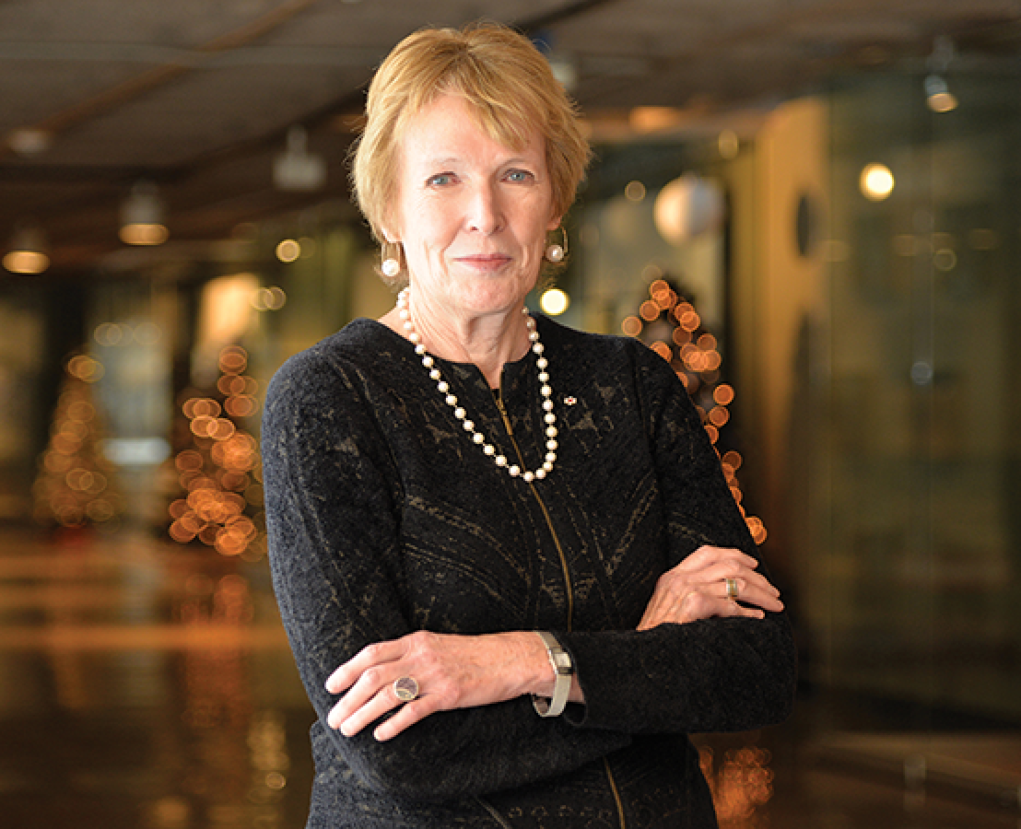
Margaret MacMillan is a Canadian historian whose books examine the decisions, personalities, and political tensions that have shaped modern history. She is particularly known for her work on the British Empire, international relations, and the origins and consequences of war. Her writing brings historical events into focus by examining not only what happened, but also why leaders made the choices they did.
Her book Paris 1919: Six Months That Changed the World brought international attention to the negotiations that followed World War I. She later explored the road to the First World War in The War That Ended Peace and examined the broader role of conflict in human societies in War: How Conflict Shaped Us.
Beyond her books, MacMillan has held senior positions at the University of Toronto and the University of Oxford. Her academic career, public lectures, and commentary on international affairs have helped make her a prominent voice in discussions about diplomacy, leadership, and the study of history.
Who Is Margaret MacMillan?
Margaret MacMillan is a historian, author, and academic known for studying the relationship between historical events and the decisions of political leaders. Her research has covered British India, the British Empire, Canada, international diplomacy, and the causes of war.
She is an emeritus professor of international history at the University of Oxford and a professor of history at the University of Toronto. She previously served as Warden of St Antony’s College at Oxford and Provost of Trinity College at the University of Toronto.
MacMillan’s work appeals to both academic readers and the wider public. Rather than treating history as a list of dates and events, she examines the competing interests, assumptions, personalities, and circumstances that shape political decisions.
Her research has also made her a contributor to conversations about contemporary international affairs. Historical comparisons are a recurring feature of her public work, particularly when political leaders face questions involving diplomacy, security, conflict, and peace negotiations.
What Is Margaret MacMillan’s Full Name?
Her full name is Margaret Olwen MacMillan. She is generally known professionally as Margaret MacMillan and publishes her historical work under that name.
How Old Is Margaret MacMillan?
Margaret MacMillan was born on December 23, 1943. As of October 2026, she is 82 years old.
She was born in Toronto, Ontario, Canada, and developed an academic career that has connected Canadian and British universities with the study of international history.
Where Is Margaret MacMillan From?
MacMillan is Canadian and was born in Toronto. Her academic and professional life has included substantial periods in both Canada and the United Kingdom.
Her work across these countries reflects her interest in the relationships between national histories and wider international developments. She has studied the British Empire, Canada’s historical development, and the diplomacy that helped shape Europe and the international system during the 19th and 20th centuries.
MacMillan’s family background also connects her to British political history. Her maternal grandmother, Olwen Carey Evans, was a granddaughter of David Lloyd George, the British prime minister during much of World War I. This family connection is part of her personal background, although her historical reputation rests primarily on her own research, teaching, and writing.
Margaret MacMillan’s Education
MacMillan studied history at the University of Toronto, where she attended Trinity College and earned her Bachelor of Arts degree.
She continued her education at the University of Oxford. At St Hilda’s College, she completed a Bachelor of Philosophy degree in politics. She later pursued doctoral research at St Antony’s College, Oxford, focusing on British expatriates in India between 1880 and 1920.
Her doctoral research examined the social and political attitudes of the British community during the period of colonial rule in India. This subject became the basis for her first major book, Women of the Raj, published in 1988.
Her education gave her a foundation in both historical research and political analysis. Those interests remained central to her later work, particularly her examination of how imperial systems, national ambitions, and political assumptions influence international events.
How Did Margaret MacMillan Start Her Academic Career?
MacMillan began her academic career at Ryerson University in Toronto, now known as Toronto Metropolitan University. She taught there from 1975 to 2002 and spent five years as chair of the history department.
During this period, she developed her research on the British Empire, India, and international relations. Her early scholarship helped establish her interest in the connections between imperial rule, political attitudes, and the lives of people affected by colonial systems.
In 2002, she became Provost of Trinity College at the University of Toronto, serving until 2007. The position involved academic leadership and institutional responsibilities alongside her scholarly work.
She moved to the University of Oxford in 2007, becoming Warden of St Antony’s College and Professor of International History. She held the wardenship until 2017.
These appointments placed her in senior academic roles at two major universities. They also reflected a career that combined historical research, university leadership, public communication, and engagement with international affairs.
Margaret MacMillan’s Most Important Books
MacMillan has written several influential works of history. Her books examine different periods and subjects, but many share a common concern: how decisions made by individuals and governments can influence events far beyond their immediate circumstances.
Women of the Raj
Published in 1988, Women of the Raj examines the lives and experiences of British women in colonial India. The book considers their social position, daily lives, attitudes, and relationships with the colonial society around them.
The subject helped establish MacMillan’s early reputation as a historian of the British Empire. It also introduced themes that would recur in her later work, including the relationship between personal experience and broader political structures.
Paris 1919: Six Months That Changed the World
Published in 2001, Paris 1919: Six Months That Changed the World is one of MacMillan’s best-known books.
It examines the Paris Peace Conference that followed World War I, when the victorious Allied powers negotiated the terms of peace and considered how to reorganize territories and political relationships after the collapse of several empires.
The negotiations involved leaders with different priorities, including Woodrow Wilson of the United States, David Lloyd George of Britain, and Georges Clemenceau of France. Their disagreements concerned national borders, security, reparations, self-determination, and the future of defeated powers.
MacMillan explores how these decisions were shaped by political pressures and the personalities of the negotiators. The book also considers the limitations of the peace settlement and its consequences for the international order that followed.
The work received major literary recognition, including the Samuel Johnson Prize for non-fiction and the Governor General’s Literary Award in Canada.
Nixon and Mao: The Week That Changed the World
MacMillan also wrote about the opening of relations between the United States and China during President Richard Nixon’s 1972 visit to China.
The meeting between Nixon and Chinese leader Mao Zedong represented a major diplomatic shift during the Cold War. It took place against the background of tensions between China and the Soviet Union and the continuing conflict in Vietnam.
The book examines how diplomatic initiatives, strategic interests, and individual leadership contributed to a change in the relationship between two countries that had long been adversaries.
This subject reflects MacMillan’s wider interest in international relations and the ways political leaders can alter the direction of world affairs.
The War That Ended Peace
Published in 2013, The War That Ended Peace: The Road to 1914 examines the years leading up to World War I.
Rather than treating the outbreak of war as inevitable, MacMillan investigates the choices, rivalries, alliances, fears, and miscalculations that contributed to the crisis of 1914.
The book considers the actions of European leaders and the political environment in which they operated. It explores how competition among major powers and the failure to manage escalating tensions helped turn a regional crisis into a wider war.
The work is particularly relevant to readers interested in the causes of conflict and the possibility that different political decisions might have produced a different outcome.
War: How Conflict Shaped Us
Published in 2020, War: How Conflict Shaped Us takes a broader approach to the history of warfare.
MacMillan considers how war has influenced governments, societies, technology, political institutions, and human behavior. The book examines conflict as a force that has repeatedly changed the organization of societies, rather than as an event confined to battlefields.
It also raises questions about the relationship between war and peace, including why societies continue to prepare for conflict despite the enormous human and material costs.
The book reflects MacMillan’s ability to connect historical research with questions that remain relevant to contemporary readers.
Margaret MacMillan’s Approach to History
One of the defining features of MacMillan’s writing is her attention to decision-making. She often examines the individuals who took part in major historical events while also considering the larger political, economic, and social forces surrounding them.
This approach avoids presenting history as a simple sequence of unavoidable outcomes. Political leaders work within constraints, but their assumptions, ambitions, and mistakes can still make a substantial difference.
Her work also explores the limits of historical comparisons. Events from the past can help readers understand current challenges, but the circumstances of one period cannot always be transferred directly to another.
This perspective is particularly useful when studying international crises. Historical knowledge can reveal patterns in diplomacy and political behavior, but it also requires careful attention to differences between countries, leaders, and circumstances.
MacMillan’s books therefore serve readers who want to understand both the historical record and the reasoning behind the decisions that shaped it.
Margaret MacMillan’s Awards and Achievements
MacMillan has received major literary honors and academic recognition for her work.
Her notable distinctions include:
- Samuel Johnson Prize for Non-Fiction: Awarded for Paris 1919, recognizing the book’s contribution to historical writing.
- Governor General’s Literary Award: Received for Paris 1919 in the non-fiction category.
- Duff Cooper Prize: One of the honors associated with her historical writing on the Paris peace negotiations.
- Companion of the Order of Canada: A high Canadian civilian honor recognizing significant contributions to the country.
- Companion of Honour: A British honor recognizing distinguished service in areas including the arts, science, medicine, and government.
- Order of Merit: She was appointed to this selective order in 2022.
- Honorary Fellow of the British Academy: Recognition connected to her standing in historical scholarship and the humanities.
Her career has also included numerous honorary degrees, fellowships, public lectures, and academic leadership appointments.
In 2015, MacMillan delivered the CBC Massey Lectures. In 2018, she gave the BBC Reith Lectures, using the subject of war to explore the place of conflict in human history.
Margaret MacMillan’s Personal Life and Family
MacMillan was born to Robert Laidlaw MacMillan and Eiluned Carey Evans. Her family history includes a connection to David Lloyd George through her maternal grandmother.
Lloyd George served as British prime minister from 1916 to 1922, a period that included the final years of World War I and the Paris Peace Conference. MacMillan’s own historical writing on the peace negotiations provides a professional connection to this period, but her work is based on historical research rather than family association.
MacMillan generally maintains a professional public profile centered on her scholarship, books, lectures, and academic work. Her biography is most strongly documented through these activities, and personal details beyond the publicly established record are not necessary to explain her achievements.
What Is Margaret MacMillan Doing Now?
MacMillan remains known for her contributions to historical scholarship and public discussion of international affairs. Her academic affiliations, published books, lectures, and commentary continue to be central to her public profile.
Her most recent book listed in her official biography is War: How Conflict Shaped Us, published in 2020. No newer book release is confirmed in the biographical information used for this article.
In a development announced in August 2026, the International Peace Alliance named MacMillan as the recipient of its 2026 Strategic Leadership Award. The organization announced that the award would be presented at its Peace Ambassadors Awards Gala in Toronto on October 24, 2026. As of October 23, 2026, the presentation is scheduled for the following day, so it should not yet be described as an award she has already received.
The announced recognition reflects the continuing public interest in her work on diplomacy, international decision-making, war, and peace.
Why Is Margaret MacMillan Important?
MacMillan’s importance lies in her ability to connect historical evidence with questions that remain relevant to modern politics. Her books explain how international agreements are made, why governments misjudge one another, and how decisions taken during a crisis can have consequences for generations.
Her study of the 1919 Paris Peace Conference offers insight into the challenges of building a durable peace after a major war. Her research on the period before 1914 examines the dangers of escalating rivalries and failed diplomacy. Her wider work on war explores the ways conflict changes political systems and societies.
These subjects make her writing useful to students, historians, policymakers, and general readers seeking a deeper understanding of international affairs.
MacMillan does not present history merely as a collection of lessons with easy answers. Her work encourages readers to examine evidence, understand the context in which decisions were made, and recognize that political outcomes often result from a combination of long-term forces and individual choices.
Frequently Asked Questions About Margaret MacMillan
What is Margaret MacMillan known for?
She is known for writing history books about international relations, the British Empire, diplomacy, and war. Her best-known work includes Paris 1919: Six Months That Changed the World and The War That Ended Peace.
How old is Margaret MacMillan?
She was born on December 23, 1943, and is 82 years old as of October 2026.
Where was Margaret MacMillan born?
She was born in Toronto, Ontario, Canada.
What is Margaret MacMillan’s most famous book?
One of her most widely recognized books is Paris 1919: Six Months That Changed the World, which examines the peace negotiations following World War I.
Did Margaret MacMillan teach at Oxford University?
Yes. She was Professor of International History at the University of Oxford and served as Warden of St Antony’s College from 2007 to 2017.
What did Margaret MacMillan write about World War I?
She wrote Paris 1919: Six Months That Changed the World, which examines the peace conference after the war, and The War That Ended Peace, which investigates the political tensions and decisions that led to the outbreak of war in 1914.
Is Margaret MacMillan related to David Lloyd George?
Yes. Her maternal grandmother, Olwen Carey Evans, was a granddaughter of David Lloyd George, the British prime minister during much of World War I.
Has Margaret MacMillan received major awards?
Yes. Her honors include the Samuel Johnson Prize for Non-Fiction, the Governor General’s Literary Award, the Companion of the Order of Canada, the Companion of Honour, and appointment to the Order of Merit.
What is Margaret MacMillan’s latest book?
The most recent book listed in her official biography is War: How Conflict Shaped Us, published in 2020.
What is Margaret MacMillan’s latest news in 2026?
In August 2026, the International Peace Alliance announced that she would receive its 2026 Strategic Leadership Award at an event scheduled for October 24, 2026, in Toronto.


No comments yet. Be the first to share your thoughts.