
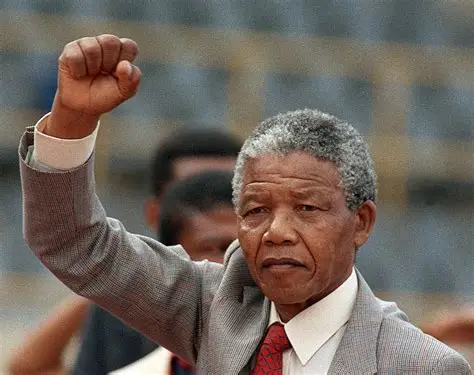
Nelson Mandela was a South African anti-apartheid leader who became the country’s first democratically elected president in 1994 after spending more than 27 years in prison. His fight against racial discrimination, his role in negotiating the end of apartheid, and his decision to support a democratic transition made him one of the most recognizable political figures of the 20th century.
Born on July 18, 1918, Mandela was originally named Rolihlahla Mandela. He became widely known by his clan name, Madiba, and received the Nobel Peace Prize in 1993 alongside former South African president F. W. de Klerk. Mandela died on December 5, 2013, at the age of 95, but his work remains central to discussions about racial equality, political freedom, reconciliation, and leadership.
Who Was Nelson Mandela?
Nelson Mandela was a lawyer, political activist, anti-apartheid campaigner, and statesman who spent much of his adult life opposing South Africa’s system of institutionalized racial segregation. He joined the African National Congress (ANC) in 1944 and helped organize resistance to laws that denied Black South Africans equal political, economic, and social rights.
His political activities brought repeated arrests, a major treason trial, and a life sentence in 1964. Mandela spent approximately 27 years in prison before his release in February 1990. Rather than seek political change through revenge, he became a leading figure in negotiations that helped end white minority rule.
In May 1994, Mandela became South Africa’s first Black president and its first president elected in a fully democratic, multiracial election. He served one term, leaving office in 1999.
His significance extends beyond his presidency. Mandela became an international symbol of resistance to apartheid, while his later work emphasized reconciliation, children’s welfare, education, and public service.
What Was Nelson Mandela’s Real Name?
Nelson Mandela’s birth name was Rolihlahla Mandela. His teacher gave him the English name Nelson when he began attending primary school, following a common practice in colonial-era South African schools.
The name Madiba comes from the Thembu clan to which Mandela belonged. Many South Africans used it as a respectful way to address him, reflecting his family and cultural heritage.
He is also frequently identified as Nelson Rolihlahla Mandela in biographies and historical records.
How Old Was Nelson Mandela?
Nelson Mandela was born on July 18, 1918, and died on December 5, 2013. He was 95 years old when he died.
His life covered major changes in South African history, from colonial rule and the expansion of racial segregation to the dismantling of apartheid and the establishment of democratic government.
Where Was Nelson Mandela From?
Mandela was born in Mvezo, a village in the Eastern Cape region of South Africa, then part of the Transkei. He belonged to the Madiba clan of the Thembu people.
His father, Nkosi Mphakanyiswa Gadla Mandela, was a traditional leader and adviser to the Thembu royal household. His mother was Nonqaphi Nosekeni.
After his father died in 1930, Mandela became a ward of Thembu regent Jongintaba Dalindyebo. He grew up partly at the royal residence in Mqhekezweni, where he heard accounts of traditional leadership, community responsibilities, and earlier resistance to outside control.
These early experiences formed part of the background to his later interest in justice and political leadership.
Nelson Mandela’s Education and Early Life
Mandela attended primary school near Qunu, where he received the name Nelson. He continued his education at Clarkebury Boarding Institute and Healdtown, two institutions that provided formal education to Black South African students during a period of deep racial inequality.
He later enrolled at the University College of Fort Hare to study for a Bachelor of Arts degree. His involvement in a student protest led to his departure before completing the degree there.
In 1941, Mandela moved to Johannesburg with his cousin Justice. The move introduced him to the harsh realities of urban racial segregation and brought him into contact with people involved in political organizing.
He worked in different roles while continuing his education, eventually completing his BA through the University of South Africa. He also studied law at the University of the Witwatersrand, although he did not complete his degree there.
Mandela’s legal training became an important part of his public life. He believed that law could be used to challenge discriminatory policies, even as he came to recognize the limits of legal action under an apartheid government.
How Did Nelson Mandela Start His Political Career?
Mandela’s political involvement grew during the 1940s as opposition to racial discrimination developed across South Africa. In 1944, he joined other activists in establishing the ANC Youth League, which pushed the African National Congress toward more organized mass action.
The election of the National Party in 1948 strengthened the government’s policy of apartheid. This system enforced racial separation through legislation governing residence, education, employment, movement, and political participation.
Mandela became increasingly involved in campaigns against these restrictions. In 1952, he played a leading role in the Defiance Campaign, a program of organized civil disobedience against discriminatory laws.
That same year, he and fellow lawyer Oliver Tambo established Mandela & Tambo, a law practice that served Black clients who faced discrimination in South Africa’s legal and political systems.
As the government intensified its repression, Mandela and other activists faced arrests and restrictions. Following the Sharpeville massacre in 1960 and the subsequent banning of the ANC, he concluded that peaceful protest alone was no longer sufficient under the conditions imposed by the state.
He helped establish Umkhonto we Sizwe, the ANC’s armed wing, in 1961. Its initial campaign focused on sabotage against government installations. This decision marked a major change in the resistance movement’s methods and remains an important part of understanding Mandela’s political history.
Why Was Nelson Mandela Imprisoned?
Mandela was arrested in August 1962 and convicted of leaving South Africa without permission and encouraging workers to strike. He received a five-year prison sentence.
The case that changed his sentence and shaped the rest of his life was the Rivonia Trial. Mandela and other anti-apartheid activists were charged with sabotage and related offenses following police raids on an underground political operation.
On June 12, 1964, Mandela and seven co-defendants received life sentences. The prosecution had sought severe punishment for their involvement in resistance activities.
Mandela spent 18 years on Robben Island before being transferred to Pollsmoor Prison in Cape Town in 1982. He was later moved to Victor Verster Prison, where he spent the final months of his imprisonment.
During those years, he became an international symbol of opposition to apartheid. Campaigners, governments, artists, students, and community organizations around the world called for his release and for the dismantling of South Africa’s racial system.
Mandela was released on February 11, 1990, following the government’s decision to unban the ANC and other political organizations. His release opened a new phase in the negotiations over South Africa’s political future.
Nelson Mandela’s Presidency and Major Achievements
Mandela’s most significant political achievement was helping guide South Africa from apartheid toward democratic government. After his release, he took part in negotiations with President F. W. de Klerk and other political leaders to establish a new constitutional order.
In 1993, Mandela and de Klerk received the Nobel Peace Prize for their efforts to bring about the peaceful end of apartheid and lay the foundations for a democratic South Africa.
South Africa held its first democratic elections with full participation across racial groups in April 1994. Mandela voted for the first time in his life and was inaugurated as president on May 10, 1994.
His administration faced the difficult task of governing a country divided by decades of discrimination, unequal access to resources, and political violence. Mandela supported national reconciliation and worked to establish democratic institutions, while his government pursued measures intended to improve housing, education, health care, and basic services.
The Truth and Reconciliation Commission, established under the new democratic order and chaired by Archbishop Desmond Tutu, investigated human rights abuses committed during the apartheid era. It became one of the most prominent efforts to address the country’s violent past without relying exclusively on criminal prosecution.
Mandela served as president until 1999. His decision to leave office after one term reinforced the principle that democratic leadership should involve a peaceful transfer of power rather than indefinite personal rule.
Nelson Mandela’s Family, Wife and Children
Mandela married three times. His first wife was Evelyn Ntoko Mase, whom he married in 1944. They had four children, including two sons, Thembekile and Makgatho, and two daughters named Makaziwe. One of their daughters died in infancy. The couple divorced in 1958.
In June 1958, Mandela married Winnie Madikizela, a social worker and political activist who later became a prominent figure in the anti-apartheid struggle. They had two daughters, Zenani and Zindzi. Their marriage ended in divorce in 1996.
On July 18, 1998, Mandela married Graça Machel, a Mozambican politician and humanitarian who had previously been married to Mozambique’s first president, Samora Machel.
Mandela’s family life was heavily affected by imprisonment and political activism. His long incarceration separated him from his children for much of their childhood, and he was not permitted to attend his mother’s funeral in 1968 or his eldest son Thembekile’s funeral in 1969.
What Did Nelson Mandela Do After Leaving Office?
After stepping down as president in 1999, Mandela continued to work on social and humanitarian causes. He supported initiatives involving children, education, public health, and the development of future leaders.
He established the Nelson Mandela Children’s Fund in 1995 and later helped create the Nelson Mandela Foundation. These organizations have worked on social development, public dialogue, archival preservation, and the promotion of the values associated with his public service.
Mandela also became involved in international efforts to address HIV and AIDS, a subject that carried significant stigma in South Africa. His public advocacy helped bring greater attention to the effects of the epidemic, including after the death of his son Makgatho in 2005.
He gradually withdrew from public life as he grew older. Mandela died at his home in Johannesburg on December 5, 2013. His death prompted tributes from political leaders and members of the public across the world.
Nelson Mandela’s Legacy and Recent Commemorations
Mandela’s legacy is closely connected to the end of apartheid, South Africa’s democratic transition, and the international campaign against racial oppression. His life is also remembered through debates about political strategy, reconciliation, economic inequality, and the challenges that remained after apartheid ended.
His name has been given to public institutions, educational programs, awards, and memorials in several countries. Mandela Day, observed on July 18, encourages people to contribute time to community service in recognition of his birthday.
A recent example of this continuing public remembrance came in October 2026, when a statue of Mandela was unveiled in Nelson Mandela Place in Glasgow, Scotland. The memorial reflects his international significance and the continuing interest in commemorating his role in the struggle against apartheid.
Mandela’s history should not be reduced to a simple story of personal forgiveness or individual triumph. His achievements were part of a much wider movement involving political organizers, workers, students, community leaders, and ordinary South Africans who challenged an unjust system. His presidency was also shaped by difficult compromises and social problems that could not be resolved in a single term.
Understanding both the achievements and the challenges of his life provides a fuller picture of why Nelson Mandela remains a central figure in modern African and world history.
Frequently Asked Questions About Nelson Mandela
What was Nelson Mandela’s real name?
His birth name was Rolihlahla Mandela. His primary school teacher gave him the English name Nelson.
When was Nelson Mandela born?
He was born on July 18, 1918, in Mvezo, in South Africa’s Eastern Cape region.
How old was Nelson Mandela when he died?
Mandela was 95 years old when he died on December 5, 2013.
Why was Nelson Mandela famous?
He was known for leading the struggle against apartheid, spending more than 27 years in prison, helping negotiate South Africa’s transition to democracy, and becoming the country’s first democratically elected president in 1994.
How long was Nelson Mandela in prison?
He spent approximately 27 years in prison, from 1962 until his release on February 11, 1990.
Did Nelson Mandela win the Nobel Peace Prize?
Yes. He shared the 1993 Nobel Peace Prize with F. W. de Klerk for their efforts to end apartheid and establish the foundations of a democratic South Africa.
Who was Nelson Mandela’s wife?
Mandela married Evelyn Mase, Winnie Madikizela-Mandela, and Graça Machel at different points in his life.
Did Nelson Mandela have children?
Yes. He had six children, four girls and two boys. Two daughters and two sons died before him.
What did Nelson Mandela do after being president?
After leaving office in 1999, he worked on humanitarian and social causes, including children’s welfare, education, public health, and leadership development.
What is Nelson Mandela remembered for today?
He is remembered for his role in ending apartheid, his commitment to democratic government, his Nobel Peace Prize, and his work to promote reconciliation and social development.


No comments yet. Be the first to share your thoughts.