
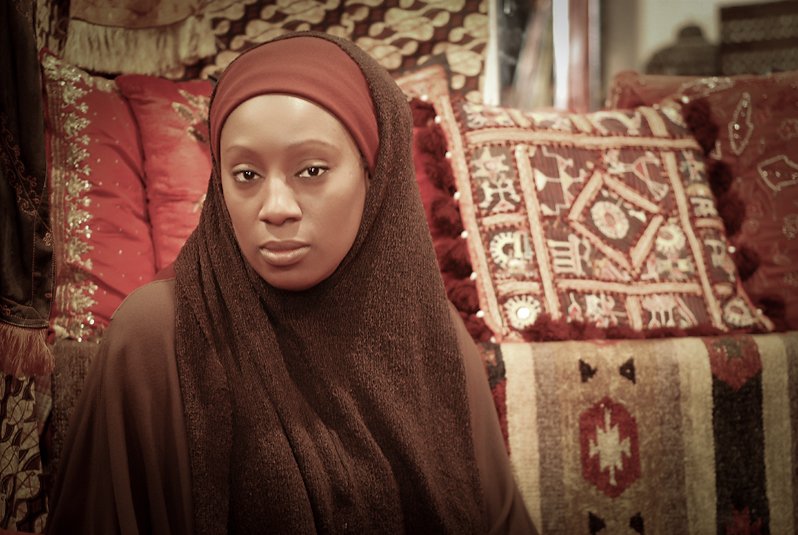
Queen Amina of Zaria is remembered as one of the most formidable women in the history of precolonial northern Nigeria. Associated with the Hausa kingdom of Zazzau, whose capital was Zaria in present-day Kaduna State, she is celebrated in historical accounts and oral traditions for her military leadership, territorial expansion, and the fortified walls linked to her name. Her story has also reached modern audiences through Amina, a Nigerian historical drama released on Netflix in 2021.
Unlike contemporary celebrities, Amina lived centuries before modern entertainment and the recording of personal details became common. Her exact birth date, the precise years of her reign, and several stories about her private life remain uncertain. What makes her biography compelling is the combination of her political legacy, her place in Hausa history, and the way generations have interpreted her story.
Who Was Queen Amina of Zaria?
Queen Amina, also known as Amina of Zazzau or Aminatu in some accounts, was a ruler associated with the Hausa state of Zazzau. She is traditionally remembered as a warrior queen who led military campaigns and strengthened her kingdom’s influence over neighboring territories.
Zazzau occupied an important position in the network of Hausa states. Its location connected communities involved in agriculture, crafts, regional trade, and commercial routes linking different parts of the region. Control of territory and trade routes could bring a ruler political influence as well as economic advantages.
Amina’s reputation rests largely on accounts that credit her with expanding Zazzau’s power and compelling neighboring communities to pay tribute. These traditions describe a ruler whose authority was demonstrated through military action rather than limited to ceremonial leadership.
Her story is particularly significant because it challenges the assumption that political and military authority in precolonial African societies belonged exclusively to men. Amina’s remembered position as a woman who exercised power over armies and neighboring territories has made her an important figure in discussions of women’s leadership in African history.
Queen Amina’s Age and Date of Birth
Queen Amina’s exact date of birth is not known. Some traditional accounts place her birth around 1533, but that date should not be treated as definitively established.
The uncertainty comes from differences between historical chronologies and oral traditions concerning the rulers of Zazzau. Some accounts place Amina’s reign in the fifteenth century, while others associate her with the sixteenth century and the period after 1576.
For this reason, there is no reliably established modern age to give her. Figures sometimes presented as her age or lifespan depend on which historical chronology is followed.
A careful biography must distinguish between dates proposed by particular traditions and facts that can be established with confidence. Amina’s historical importance does not depend on claiming certainty where the evidence remains incomplete.
Where Was Queen Amina From?
Amina is associated with Zazzau, a Hausa kingdom centered on the city now known as Zaria in Kaduna State, northern Nigeria.
The region had an established political and commercial life long before the modern Nigerian state came into existence. Its communities participated in farming, craft production, and trade, while rulers competed to maintain influence over neighboring settlements and routes.
Zazzau was one of the states traditionally grouped among the Hausa Bakwai, commonly identified as the original seven Hausa states. Its relationship with neighboring powers such as Kano and Katsina formed part of a wider political landscape in which alliances, warfare, and tribute shaped regional authority.
Amina’s story belongs to this setting. Understanding the kingdom helps explain why military campaigns and control of territory feature so prominently in the traditions surrounding her reign.
Queen Amina’s Early Life and Family Background
Traditional accounts identify Amina as the daughter of Bakwa Turunku, a ruler associated with Zazzau. Some versions describe Amina as growing up in a royal environment where she could observe political decisions and learn about the responsibilities of leadership.
Other accounts say she was introduced to military skills from an early age. These stories contribute to the familiar image of Amina as a princess who developed into a capable commander. However, details about her childhood are not documented with the same certainty as the broad historical tradition linking her to Zazzau.
Stories about her family also vary. Her brother Karama appears in accounts that place him on the throne before her accession. In that version of events, Amina participated in military campaigns before becoming ruler herself.
These narratives suggest a path from royal upbringing to political and military authority, but they should be understood as traditions preserved over time rather than a complete, verified account of her childhood.
There is also no firmly established record of her formal education in the modern sense. Descriptions of her learning political strategy or military skills belong to accounts of her upbringing and should not be confused with documented school attendance or academic qualifications.
How Did Queen Amina Become a Ruler?
One widely circulated chronology places Amina’s accession after the death of her brother Karama in 1576. According to this account, she assumed control of Zazzau and continued the kingdom’s expansion through military campaigns.
Other historical interpretations place her much earlier, partly because of the way she appears in the Kano Chronicle. These competing timelines mean that the often-repeated date of 1576 is best presented as one historical tradition rather than an uncontested fact.
Regardless of the chronology, the central feature of Amina’s story is her association with the exercise of direct political authority. She is remembered not simply as a royal woman who influenced a male ruler, but as a figure who commanded military power and shaped the fortunes of her state.
Her position is unusual in many familiar accounts of precolonial political leadership, which often concentrate on kings and male commanders. Amina’s story provides a reason to examine the roles women could occupy in particular African political systems, while avoiding the assumption that every detail of the surviving tradition is equally certain.
Queen Amina’s Military Campaigns and Achievements
Amina’s most enduring reputation is that of a military leader. Historical traditions credit her with extending Zazzau’s reach into neighboring territories and demanding tribute from other states.
Accounts associate her campaigns with areas connected to Nupe and Kwararafa, although the extent of her conquests and the precise political arrangements involved are not established beyond dispute. Some narratives describe conquered communities as coming under Zazzau’s direct control, while others emphasize tribute and regional dominance.
Tribute was an important feature of political relationships in many precolonial states. It could provide rulers with wealth, goods, and recognition of their authority. Military success could therefore increase a kingdom’s resources while strengthening its position against competing powers.
Amina’s reputation also reflects the importance of regional trade. Zazzau’s position offered opportunities to influence commercial movement between northern communities and areas farther south. Expanding political control could help a ruler secure routes and strengthen the state’s economic position, although the specific results of each campaign are difficult to reconstruct in detail.
Her legacy is not simply a story of battlefield victories. It also concerns the ability of a ruler to project power beyond the capital and maintain a position among neighboring states.
What Are Queen Amina’s Walls?
One of the most recognizable elements of Amina’s legacy is the tradition of fortified earthen walls known as ganuwar Amina, commonly translated as Amina’s walls.
These walls are associated with the defense of settlements and the protection of territory. Traditional accounts credit Amina with building or extending fortifications around towns during her campaigns. The structures are remembered as physical expressions of her military strategy and authority.
Defensive walls served practical purposes. They could help protect inhabitants, control entry into settlements, and make an attack more difficult. In a region where political competition and warfare could threaten communities, fortification was an important part of urban defense.
The name attached to these walls also shows how historical memory works. A ruler’s reputation can survive not only through written accounts but through structures, place names, oral narratives, and traditions passed between generations.
It is important, however, not to assume that every surviving wall attributed to Amina was personally built during her reign. The name reflects a powerful tradition connecting her with fortification, while the history of individual structures may be more complicated.
Queen Amina’s Personal Life and Marriage
Stories about Amina’s personal life are less reliable than the broad tradition of her political and military role.
Some popular versions portray her as a ruler who refused marriage because she wanted to preserve her independence. Other dramatic tales describe romantic relationships and tragic endings. These stories have helped shape her image in popular culture, but they cannot all be accepted as verified biographical facts.
There is no sufficiently secure record to establish a husband, children, or a complete account of her romantic life. Claims about her private relationships should therefore be treated cautiously.
This distinction matters because retellings sometimes give greater attention to a woman’s romantic life than to her political decisions. Amina’s historical significance is better understood through the leadership and territorial ambitions associated with her name than through stories that cannot be independently confirmed.
Queen Amina in Popular Culture: The Movie Amina
Queen Amina’s story has inspired modern creative works, including the Nigerian historical drama Amina, which premiered on Netflix on November 4, 2021.
Directed by Izu Ojukwu, the film stars Lucy Ameh as Amina, alongside Ali Nuhu and Clarion Chukwura. It presents a dramatized account of the warrior queen’s life, with a story centered on military conflict, royal politics, and the struggle to establish authority in Zazzau.
The movie introduces viewers to a world shaped by competing rulers, military ambitions, and expectations about women’s roles. By placing Amina at the center of a historical action drama, the production brings a figure from Nigeria’s past to audiences who may know her name without being familiar with the traditions surrounding her reign.
Ameh’s role required preparation for the physical demands of the production. In an interview around the film’s release, she discussed the challenge of portraying Amina and the training involved in learning sword fighting and horseback riding.
The film is an interpretation, not a substitute for historical research. Because much of Amina’s life comes to us through oral tradition and later historical accounts, filmmakers must make creative decisions when building scenes, dialogue, relationships, and dramatic conflicts. Those choices can help a story work on screen, but they do not automatically establish that the depicted events happened exactly as shown.
For readers interested in the historical figure, the movie is a starting point for exploring Amina’s story, not the final word on her life.
Was the Movie Amina Historically Accurate?
The film draws on the tradition of Amina as a warrior ruler of Zazzau, but its dramatic scenes should not be read as a complete record of historical events.
The surviving accounts do not provide the kind of detailed documentation available for many modern public figures. Precise dialogue, private relationships, and the sequence of individual battles are difficult to verify. A feature film must create a coherent narrative from material that may be incomplete or disputed.
The production also attracted public discussion about its historical presentation, including choices involving language and casting. Such debate reflects a broader challenge in historical filmmaking: how to turn a culturally significant story into an engaging movie without giving viewers the impression that every dramatic detail is documented fact.
A balanced approach recognizes the film’s role in bringing Nigerian history to a wider audience while keeping a distinction between the historical traditions surrounding Amina and the creative decisions made for the screen.
Queen Amina’s Legacy in Nigerian History
Amina remains an important figure in the historical memory of northern Nigeria. Her name is associated with Zaria, military leadership, territorial expansion, and the defensive walls attributed to her reign.
Her story also has a wider place in discussions of women and political authority in precolonial Africa. It offers a counterpoint to accounts that overlook women’s participation in governance and warfare.
At the same time, her biography illustrates the limits of historical evidence. The disagreement over her dates and the mixture of written accounts with oral tradition require readers to approach specific claims with care. Recognizing uncertainty does not erase her place in history. It helps distinguish what is broadly remembered from what remains contested.
The continued interest in Amina, including the 2021 film, shows that historical figures can remain relevant through new forms of storytelling. Each retelling introduces her to a different audience, while also creating a responsibility to separate dramatic invention from the evidence available.
Frequently Asked Questions About Queen Amina of Zaria
What was Queen Amina’s real name?
She is commonly known as Amina of Zazzau or Queen Amina of Zaria. The name Aminatu also appears in some traditions.
How old was Queen Amina?
Her exact date of birth is not firmly established, so her age cannot be stated with confidence. Some accounts place her birth around 1533, but the chronology of her life remains disputed.
Where was Queen Amina from?
She was associated with Zazzau, a Hausa kingdom centered on present-day Zaria in Kaduna State, northern Nigeria.
What was Queen Amina famous for?
She is best known in historical tradition as a warrior queen who expanded Zazzau’s influence through military campaigns. She is also associated with fortified earthen walls known as Amina’s walls.
Was Queen Amina a real historical person?
She is generally treated as a historical ruler whose story survives through written accounts and oral traditions. However, many details of her life, including the precise dates of her reign, remain disputed.
Did Queen Amina get married?
There is no firmly established historical record that confirms her marital status. Popular stories about her refusal to marry or her romantic relationships should be treated as traditions rather than verified facts.
Does Queen Amina have a movie about her life?
Yes. Amina, directed by Izu Ojukwu and starring Lucy Ameh, was released on Netflix on November 4, 2021. It is a historical drama inspired by the traditions surrounding the queen.
Is the movie Amina a true story?
The film is based on the story of a historical figure, but it dramatizes her life. Its scenes and personal details should not all be treated as historically verified.
Conclusion
Queen Amina of Zaria occupies a distinctive place in Nigeria’s historical memory as a ruler associated with military campaigns, territorial expansion, and the power of Zazzau. Although the precise dates and several personal details remain uncertain, her reputation has endured through historical traditions and cultural retellings.
The film Amina has brought her story to a modern screen audience, creating another route through which people can encounter her name and legacy. Understanding the queen requires looking beyond the drama to the history of Zazzau, the traditions that preserve her memory, and the evidence that historians continue to examine.
For Matchket.com readers, Amina’s story connects history and popular culture while reminding us that an engaging screen portrayal and a carefully established historical account are not always the same thing.



No comments yet. Be the first to share your thoughts.