
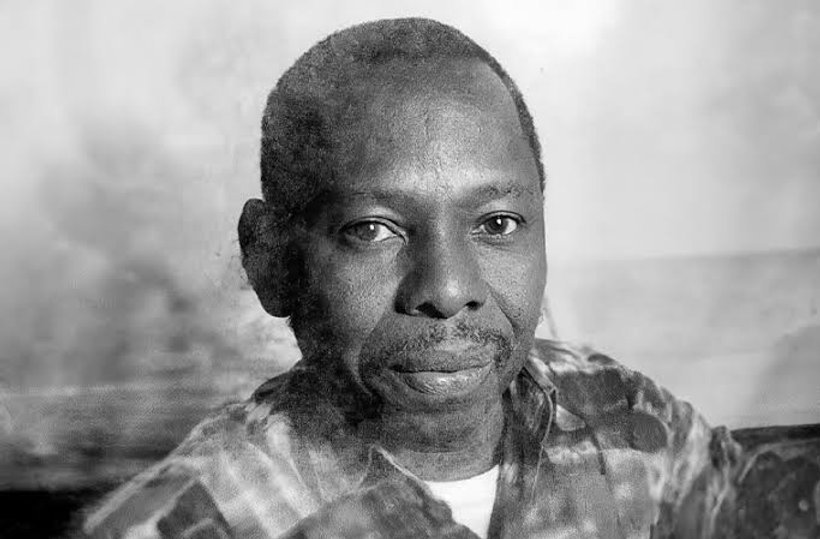
Ken Saro-Wiwa was a Nigerian writer, television producer, businessman, and environmental activist whose creative work reached millions of viewers while his political campaigning brought international attention to the struggles of the Ogoni people. He is remembered for Sozaboy: A Novel in Rotten English, the satirical television series Basi & Company, and his campaign against environmental damage and political marginalization in Nigeria’s oil-producing Niger Delta.
Born on October 10, 1941, Saro-Wiwa developed a career that moved between literature, broadcasting, business, and public service. His life ended on November 10, 1995, when Nigeria’s military government executed him and eight other Ogoni men after a widely condemned tribunal trial. His story remains important to Nigerian literature, television history, environmental activism, and the debate over corporate responsibility.
Who Was Ken Saro-Wiwa?
Ken Saro-Wiwa was a Nigerian author and television producer from the Ogoni community in Rivers State. He became widely known for combining satire with social commentary, particularly in his books and television productions. Later, he became one of the leading figures in the Movement for the Survival of the Ogoni People, commonly known as MOSOP.
His career did not follow a conventional path through the arts. He worked as a teacher, university lecturer, government administrator, and businessman before devoting much of his attention to writing, broadcasting, and activism.
Saro-Wiwa’s creative work often examined corruption, social inequality, political ambition, and the difficulties ordinary Nigerians faced. His activism addressed a related set of concerns, including environmental pollution, the distribution of oil wealth, and the political rights of minority communities.
What Was Ken Saro-Wiwa’s Real Name?
His full name was Kenule Beeson Saro-Wiwa. He was commonly known as Ken Saro-Wiwa, the name under which his books and television work became recognized.
He was born into an Ogoni family in Bori, in present-day Rivers State, Nigeria. His family background and connection to Ogoniland later became central to his public identity and political activities.
How Old Was Ken Saro-Wiwa When He Died?
Ken Saro-Wiwa was born on October 10, 1941, and died on November 10, 1995. He was 54 years old.
His execution occurred during the military rule of General Sani Abacha. The case attracted international condemnation because of concerns about the fairness of the tribunal proceedings and the treatment of the Ogoni activists involved.
Ken Saro-Wiwa’s Early Life and Education
Saro-Wiwa grew up in Bori, within the Ogoni area of what is now Rivers State. He attended a local Native Authority primary school before proceeding to Government College Umuahia, one of Nigeria’s established secondary schools.
His academic performance earned him a scholarship to study English at the University of Ibadan. At university, he developed his interests in literature and drama, gaining experience that would later inform his work as a writer and television producer.
His education exposed him to literary traditions and debates about society, politics, and culture. Rather than confining himself to academic writing, he became interested in communicating ideas through forms that could reach a much wider audience.
After graduating in 1965, he worked briefly in university teaching. His early academic appointments included work at the University of Lagos and the University of Nigeria, Nsukka. The Nigerian Civil War, which began in 1967, interrupted this phase of his career and drew him into government administration.
How Did Ken Saro-Wiwa Start His Career?
Saro-Wiwa’s professional life began in education, but his interests extended well beyond the classroom. During the Nigerian Civil War, he served as a civilian administrator in Bonny, an important location in the Niger Delta. He supported the federal government’s position during the conflict.
After the war, he became a commissioner for education in the Rivers State government. His time in public service brought him into contact with the political and economic questions affecting the region, including the position of Ogoni communities within the Nigerian federation.
He left the state government in 1973 after disagreements associated with his advocacy for greater Ogoni autonomy. He subsequently pursued business ventures, including retail and real estate, while continuing to develop his writing.
These different experiences gave him material for both fiction and nonfiction. His writing drew on observations of government, public institutions, commercial life, and the social pressures faced by ordinary people.
Ken Saro-Wiwa’s Books and Literary Career
Saro-Wiwa wrote novels, short stories, plays, children’s books, essays, journalism, and political commentary. His work was not limited to one literary style. He could use humor to expose everyday hypocrisy, but he could also write directly about war, state power, and the treatment of marginalized communities.
Sozaboy: A Novel in Rotten English
Published in 1985, Sozaboy: A Novel in Rotten English is among Saro-Wiwa’s best-known books. The novel follows a young man drawn into military service during a civil war. His early excitement about becoming a soldier gives way to fear, confusion, and the brutal realities of armed conflict.
One of the book’s distinctive features is its use of a deliberately unconventional form of English, influenced by Nigerian speech patterns and Pidgin. Rather than treating language as a neutral vehicle for the story, Saro-Wiwa used it to shape the reader’s understanding of the main character and his world.
The novel also challenges romantic ideas about war. Through the young recruit’s experiences, it explores how people with limited power can become caught in political conflicts whose consequences they do not fully understand.
A Forest of Flowers
A Forest of Flowers, published in the 1980s, is a collection of short stories that examines the pressures and contradictions of Nigerian society. Saro-Wiwa uses humor, irony, and sharply observed characters to explore greed, official neglect, social rivalry, and personal ambition.
The stories demonstrate his ability to examine serious problems through ordinary situations. His characters are not simply symbols of political failure. They are people attempting to navigate difficult circumstances, sometimes making poor choices themselves.
On a Darkling Plain
Published in 1989, On a Darkling Plain: An Account of the Nigerian Civil War draws on Saro-Wiwa’s experiences during the conflict. The book offers a personal perspective on a war that reshaped Nigeria and affected communities across the country.
His writing about the war complements the fictional approach of Sozaboy. One examines the conflict through a young fictional soldier, while the other provides a nonfiction account informed by the author’s own experience.
Other Notable Works
Saro-Wiwa’s published works also include Songs in a Time of War, Adaku & Other Stories, A Month and a Day: A Detention Diary, Genocide in Nigeria: The Ogoni Tragedy, and books associated with the character Mr. B.
His nonfiction writing became increasingly connected to his political campaign. These works documented his arguments about the Ogoni people’s position in Nigeria and the environmental consequences of oil extraction.
Ken Saro-Wiwa’s Television Career: Basi & Company
Although Saro-Wiwa became internationally known for his activism, his television career is an important part of his biography. He created and produced Basi & Company, a Nigerian sitcom that aired on the Nigerian Television Authority during the 1980s and into 1990.
The series centered on Basi, an ambitious man who continually searched for ways to become wealthy without doing the hard work required to achieve lasting success. His schemes and excuses provided the basis for comedy, while the stories satirized greed, dishonesty, social pretensions, and the desire for quick money.
The show’s humor was grounded in recognizable social behavior. Instead of relying only on slapstick, it used its central character and the situations around him to expose contradictions in everyday life.
Saro-Wiwa wrote and produced the series, helping establish himself as a significant figure in Nigerian television. The program ran for multiple seasons and became widely popular, with later broadcasts reaching viewers beyond Nigeria.
Basi & Company also showed how his creative work and political interests overlapped. The series used comedy to question social attitudes and the pursuit of wealth, while his later activism confronted the larger political and economic systems shaping life in the Niger Delta.
Ken Saro-Wiwa’s Environmental and Human Rights Activism
Saro-Wiwa’s activism grew from his concern about the conditions affecting Ogoniland, an oil-producing area in the Niger Delta. Oil extraction brought substantial economic value to Nigeria, but Ogoni communities raised concerns about pollution, damaged farmland and waterways, limited local benefits, and political exclusion.
In 1990, Saro-Wiwa became a leading figure in the Movement for the Survival of the Ogoni People. MOSOP called for political recognition, a fairer share of oil revenues, environmental protection, and compensation for damage associated with oil production.
The Ogoni Bill of Rights articulated many of these demands. In January 1993, a major peaceful demonstration drew large numbers of Ogoni participants and brought the movement’s grievances to international attention.
Saro-Wiwa argued that the Ogoni people should be able to defend their land and determine more of their political and economic future. His campaign placed pressure on both the Nigerian government and oil companies operating in the region.
His activism also drew criticism and opposition from powerful interests. He was detained on several occasions before his final arrest in 1994. Following the killing of four Ogoni leaders in May of that year, he and other Ogoni men were charged in connection with the deaths.
Saro-Wiwa denied responsibility for the killings. The tribunal that convicted him was widely criticized by international observers, human rights organizations, and governments that questioned the fairness of the proceedings.
Ken Saro-Wiwa’s Execution and International Reaction
On November 10, 1995, Ken Saro-Wiwa and eight other Ogoni men were executed by hanging. The group became known as the Ogoni Nine.
The executions provoked international outrage. Critics argued that the trial had failed to meet basic standards of justice and that the military government was suppressing a nonviolent campaign for environmental and political rights.
Nigeria faced serious diplomatic consequences, including suspension from the Commonwealth following the executions. The case also intensified international debate over the responsibilities of oil companies operating in regions where communities reported environmental damage and human rights abuses.
Saro-Wiwa’s death changed how many people outside Nigeria understood the Ogoni struggle. His work as a novelist and television producer became inseparable from the political campaign that had defined his final years.
Ken Saro-Wiwa’s Family and Personal Life
Saro-Wiwa was married to Maria Saro-Wiwa, and they had children, including Ken Wiwa, who became a writer and journalist, and Zina Saro-Wiwa, who developed a career in filmmaking and visual art.
His children and other relatives have contributed to public discussion of his life, writings, and political legacy. His son Ken Wiwa wrote about his father and their complicated relationship in In the Shadow of a Saint.
Saro-Wiwa’s family life should be understood alongside, but not reduced to, his public career. His writing, business interests, television production, and activism occupied different parts of his life, and his execution left a lasting impact on those closest to him.
Awards and Recognition
Ken Saro-Wiwa received recognition for his environmental and human rights work. In 1995, he was awarded the Goldman Environmental Prize, which recognizes grassroots environmental leadership.
His execution also led to lasting recognition by literary and human rights organizations. His case became a reference point in international discussions about freedom of expression, political imprisonment, environmental justice, and the safety of writers who challenge powerful institutions.
His most important achievement cannot be measured only through awards. His writing brought social criticism to readers and television audiences, while his organizing helped make the Ogoni people’s demands visible around the world.
Ken Saro-Wiwa’s Legacy in Literature and Popular Culture
Saro-Wiwa’s legacy extends across several fields. In literature, Sozaboy remains an important Nigerian antiwar novel, notable for its use of language and its portrayal of a young soldier caught in a destructive conflict. His short stories and essays provide further insight into the social and political concerns that shaped his work.
In television, Basi & Company demonstrated that popular comedy could do more than entertain. Its satire addressed the pursuit of wealth and the social habits that allowed dishonesty to flourish.
His activism continues to influence conversations about the Niger Delta, oil pollution, corporate accountability, and the rights of minority communities. The issues he raised have not disappeared simply because he was executed.
In 2025, the 30th anniversary of the executions of Saro-Wiwa and the other Ogoni men prompted memorial events and renewed attention to their campaign. These commemorations reflect the continuing importance of the case, although remembrance alone does not resolve the environmental and political concerns that formed the basis of the movement.
For readers discovering him through his books or television work, Saro-Wiwa’s career offers a reminder that popular culture and political life are not always separate. His stories made social problems accessible to a broad audience, while his activism demanded that those problems be confronted directly.
Frequently Asked Questions About Ken Saro-Wiwa
What was Ken Saro-Wiwa famous for?
He was known as a Nigerian writer, television producer, and environmental activist. His best-known creative works include the novel Sozaboy: A Novel in Rotten English and the television sitcom Basi & Company.
What was Ken Saro-Wiwa’s real name?
His full name was Kenule Beeson Saro-Wiwa.
When was Ken Saro-Wiwa born?
He was born on October 10, 1941, in Bori, in present-day Rivers State, Nigeria.
How old was Ken Saro-Wiwa when he died?
He was 54 years old when he was executed on November 10, 1995.
What is Ken Saro-Wiwa’s most famous book?
Sozaboy: A Novel in Rotten English, published in 1985, is generally considered his best-known novel. It explores the experience of a young recruit during a civil war.
What TV show did Ken Saro-Wiwa create?
He created and produced Basi & Company, a Nigerian sitcom that used comedy to satirize greed, dishonesty, and the pursuit of easy wealth.
Was Ken Saro-Wiwa an environmental activist?
Yes. He was a leading figure in MOSOP, which campaigned for Ogoni rights, environmental protection, political recognition, and a fairer share of the benefits of oil production.
Why was Ken Saro-Wiwa executed?
He was convicted by a military tribunal in connection with the deaths of four Ogoni leaders and executed in 1995. The trial was widely condemned by international observers who questioned its fairness.
Did Ken Saro-Wiwa win any awards?
Yes. He received the Goldman Environmental Prize in 1995 in recognition of his environmental activism.
What is Ken Saro-Wiwa’s legacy today?
He is remembered for his literary and television work, his campaign for Ogoni rights, and his role in drawing international attention to environmental damage and human rights concerns in the Niger Delta.



No comments yet. Be the first to share your thoughts.